

Analysis of
Relationships and Cephalometric
Unified System
Welcome to ARCUS – Unified Cephalometric Relationship Analysis
At ORTHOPROGRESSIVE, we are proud to introduce ARCUS, an innovative diagnostic tool based on artificial intelligence that transforms cephalometric analysis, offering precise and personalized results for orthodontics.
What is ARCUS?
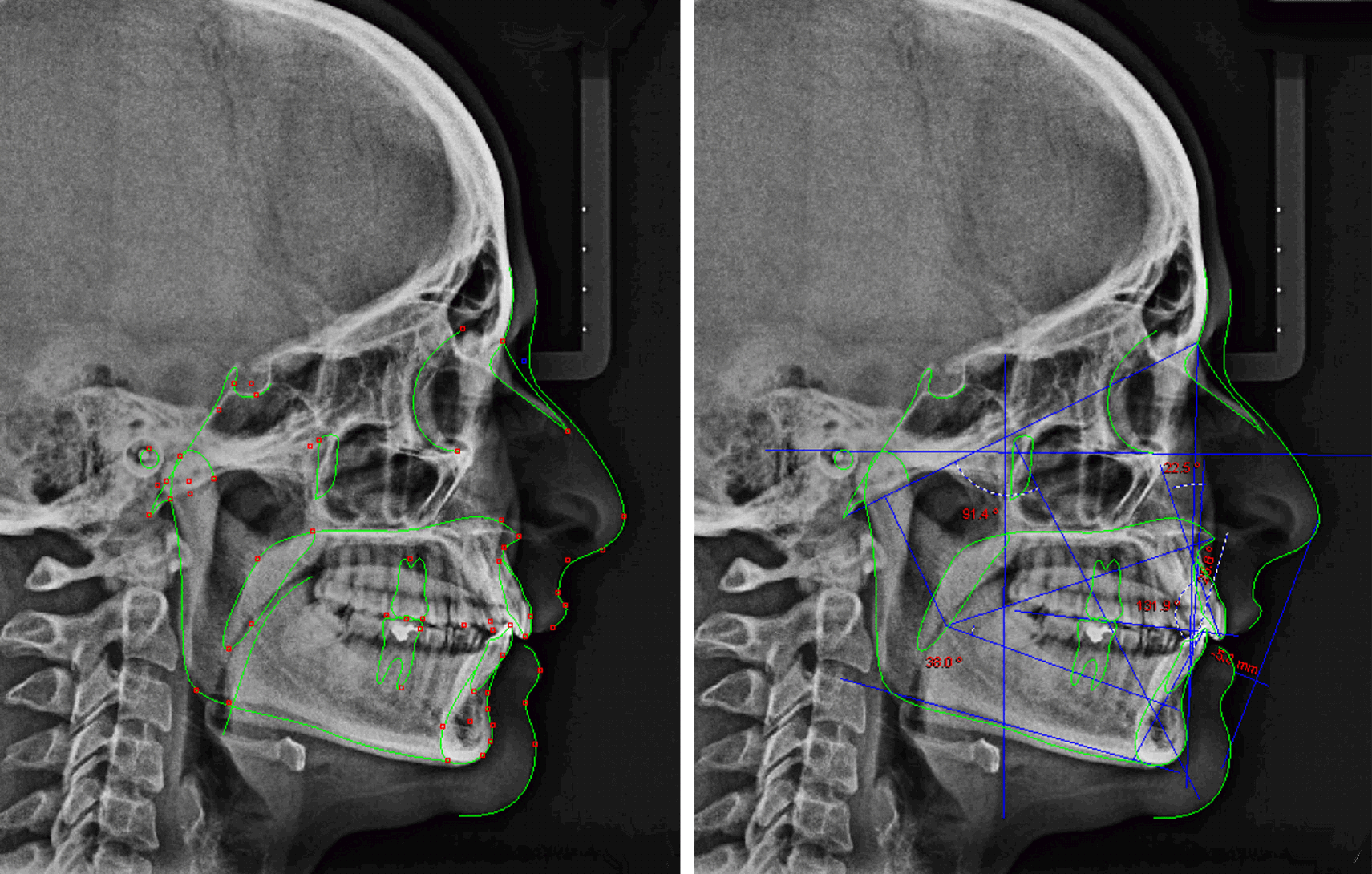
ARCUS (Unified Cephalometric Relationship Analysis) is an advanced system that uses neural networks and machine learning to process both radiographic images and cephalometric measurements. Its goal is to provide a precise diagnosis of the cranial and mandibular anatomical relationships, now with additional components that include the analysis of parafunctions and growth statistics.
How does ARCUS work?
- Cephalometric pattern classification: Identifying facial and skeletal features that may indicate possible malformations or disorders.
- Diagnosis prediction: Generating reliable diagnoses based on comparisons with large databases, enabling accurate and informed decision-making.
- Orthodontic planning assistance: Providing personalized recommendations for interventions and treatments based on the results obtained.
- Parafunction and growth analysis: Assessing the patient’s habits and growth patterns, offering a long-term perspective on their evolution.
ARCUS also includes an internal self-assessment program, which allows for a deeper understanding of etiopathologies, neuroanatomy, oral physiology, and other essential aspects of orthodontic diagnosis, forming a key part of the theoretical and practical understanding in the pedagogical process of orthodontics.
ARCUS evaluation test
ARCUS is a unified cephalometric diagnostic system designed to analyze craniofacial relationships in an integrated and hierarchical manner, going beyond the isolated interpretation of linear or angular measurements. The core concept of ARCUS is based on the idea that form, function, and growth pattern (Biotype) cannot be evaluated as independent entities, but rather as interrelated units within a dynamic and unified system.
The ARCUS multilevel assessment system is designed as a structured diagnostic and cephalometric test with progressive levels of analysis and an extensive database that allows, for example, the linking of cephalometric and clinical situations or functional alterations in a single question. This enables a gradual interpretation of craniofacial and dental relationships according to clinical complexity and diagnostic needs.
This multilevel design ensures that the diagnosis evolves from a comprehensive structural assessment to a detailed functional and predictive evaluation, maintaining consistency throughout the entire diagnostic process.
LEVEL I – Structural Bases
Global Craniofacial Assessment
Purpose:
To establish the structural baseline of the craniofacial complex.
Focus:
-
Cranial base relationships
-
Sagittal and vertical skeletal patterns
-
Global facial proportions
Clinical value:
-
Identifies the primary skeletal pattern
-
Defines the diagnostic starting point
-
Guides the need for deeper analysis
LEVEL II – Skeletal and Dental Relationships
Relationships Between Systems
Purpose:
To evaluate the relationships between skeletal and dentoalveolar units.
Focus:
-
Maxillo-mandibular relationships
-
Dental position relative to basal bones
-
Compensation patterns
Clinical value:
-
Distinguishes between skeletal discrepancy and dental compensation
-
Supports treatment strategy selection
LEVEL III – Functional and Growth Analysis
Dynamic Evaluation
Purpose:
To integrate function and growth potential into the diagnosis.
Focus:
-
Growth direction and rotational patterns
-
Neuromuscular patterns and malocclusions, Functional matrices
-
Developmental tendencies
Clinical value:
-
Enhances predictive capacity
-
Supports timing and modality of treatment
LEVEL IV – Integrated Diagnostic Synthesis
Clinical Decision Framework
Purpose:
To synthesize all previous levels into a coherent diagnostic conclusion.
Focus:
-
Integration of structure, function, and growth
-
Identification of therapeutic priorities
-
Risk and limitation assessment
Clinical value:
-
Provides a clear diagnostic statement
-
Supports predictable clinical decision-making
Make a test
Watch a Message About Our Campaigns
Questions in the Database
About Our Evaluation
Climate Stabalization
Curabitur arcu erat, accumsan id imperdiet et, porttitor at sem. Donec rutrum congue leo eget malesuada.
We Have the Power to Impact Our Future, and We’re Doing Something About It
Make
$14,032 Raised
Renewable Energy Campaign
Sed ut perspiciatis unde omnis iste natus error sit voluptatem accusantium doloremque laudantium, totam rem aperiam, eaque ipsa quae ab illo inventore veritatis et quasi architecto beatae vitae dicta sunt explicabo.
Get Involved
Upcomming Events
02
Jan
Windpower Conference
Nunc sem sapien, convallis sit amet augue ac, pharetra auctor ex. Fusce nunc lacus, consequat id dui et, sodales faucibus massa. More Details
06
Jan
Plant a Tree
Nunc sem sapien, convallis sit amet augue ac, pharetra auctor ex. Fusce nunc lacus, consequat id dui et, sodales faucibus massa. More Details
23
Jan
Save a Life
Nunc sem sapien, convallis sit amet augue ac, pharetra auctor ex. Fusce nunc lacus, consequat id dui et, sodales faucibus massa. More Details
Our Partners & Sponsors


- Lorem ipsum
- Consectetuer.
- Aliquam tincidunt
- Mauris eu risus
- Vestibulum
- Auctor dapibus
- Neque
- Nunc dignissim
- Risus id metus
- Cras ornare
- Tristique elit
- Vivamus vestibulum
- Ntulla nec ante
- Praesent placerat
- Risus quis eros
- Fusce pellentesque
- Suscipit nibh.
- Integer vitae
- Vestibulum commodo
- Felis quis
- Ut aliquam
- Sollicitudin leo
- Cras iaculis
- Ultricies nulla