Assessment of All Points of View and Confirmation Bias. A Critical Perspective
In clinical practice, I have often observed how easily our decisions can be influenced by what is known as confirmation bias—the tendency to interpret and prioritize information in a way that supports our preexisting beliefs or preferred treatment approach. In orthodontics, this may lead us to favor a particular technique or system while overlooking alternative diagnostic interpretations that could be equally or more appropriate. This tendency is frequently accompanied by other cognitive shortcuts, such as anchoring to an initial diagnosis or relying on what is most familiar or recently learned, rather than what is most suitable for the patient.
In a field as diverse and rapidly evolving as orthodontics, this becomes especially relevant. Today, we are surrounded by multiple therapeutic philosophies, increasingly sophisticated technologies, and strong commercial influences that shape clinical trends. While this has undoubtedly expanded our capabilities, it has also made it easier to fall into rigid patterns of thinking, where adherence to a single system can limit our ability to critically evaluate other possibilities. In my own experience, remaining within one conceptual framework without questioning it can narrow not only treatment planning, but also our understanding of growth, function, and biomechanics.
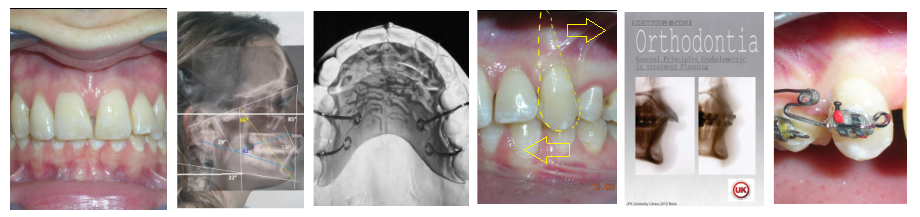
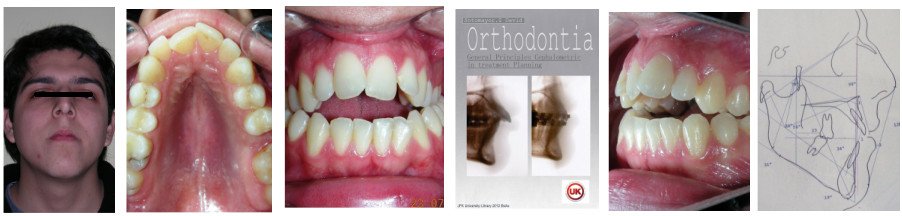
When I first began discussing bioprogressive orthodontics in conferences, courses, and clinical settings, I encountered a certain resistance, particularly from colleagues who associated it with an “old-school” approach. Over time, I realized that this reaction was not simply about the technique itself, but about how we, as clinicians, tend to filter information through our existing preferences. Ironically, in an era dominated by clear aligners and low-friction systems—largely focused on permanent dentition—we may unintentionally dismiss concepts that offer a broader biological perspective.
For me, the key is not to oppose modern orthodontics, but to integrate it thoughtfully with well-established principles. The work of Robert M. Ricketts and the contributions of clinicians such as Ronald Roth, Hugo Trevisi (MBT technique), and Thomas Pitts demonstrate that orthodontic knowledge evolves through adaptation rather than replacement. Revisiting bioprogressive concepts does not mean going backward; it means understanding them in a structured and contemporary way, and recognizing their value within today’s technological context.
Ultimately, avoiding confirmation bias requires a deliberate effort to stay intellectually flexible. It involves questioning our own assumptions and being willing to explore different approaches, even those that may initially seem unfamiliar or outdated. In my view, a more complete orthodontic practice emerges when we combine critical thinking with openness—integrating multiple perspectives to better respond to the individual needs of each patient.
With the emergence of each new technological advancement in orthodontics, it often seems as though the knowledge accumulated over decades is not truly integrated, but rather set aside—as if we were attempting “ to reinvent the wheel”. In this process, valuable and time-tested concepts risk being overlooked, despite their continued relevance for specific patients. I consider it unfair to confine every case within a predetermined protocol dictated primarily by a system or technology, when individual variability clearly requires a more thoughtful and adaptable approach.
For this reason, our clinical decisions should be guided as much as possible by objective and measurable criteria rather than subjective perceptions. Even elements such as beauty, often considered inherently subjective, can be approached in a more objective manner within our profession, as they are closely linked to proportions, balance, and quantifiable relationships.
At the same time, until new evidence reshapes our understanding of craniofacial biology, our decisions regarding treatment mechanics should remain oriented toward what is most efficient and biologically sound for our patients. Ultimately, it is also our responsibility to communicate this perspective clearly, helping patients navigate beyond the constant advertising pressure that surrounds modern orthodontics, and ensuring that their treatment is guided by knowledge, not by trends.
REFERENCES
- Petrén, S., et al. (2025). A systematic review considering the risk of bias in orthodontic RCTs over 55 years. European Journal of Orthodontics.
- Papadimitriou, A., et al. (2020). Social media and orthodontic treatment from the patient’s perspective. European Journal of Orthodontics.
- Fleming, P. S., et al. (2016). Risk of bias and magnitude of effect in orthodontic randomized controlled trials.
- Sifakakis, I., et al. (2021). Novelty bias in orthodontics: exaggerated early treatment effects.
Confirmation bias in orthodontics can limit clinical judgment by reinforcing preexisting treatment preferences. In a field with increasing technological and philosophical diversity, this may restrict objective decision-making. This article highlights the importance of integrating different orthodontic concepts while prioritizing measurable, evidence-based criteria over subjective interpretation.