
LEVEL I – Structural Bases
Global Craniofacial Assessment
Purpose:
To establish the structural baseline of the craniofacial complex.
Focus:
-
Cranial base relationships
-
Sagittal and vertical skeletal patterns
-
Global facial proportions
Clinical value:
-
Identifies the primary skeletal pattern
-
Defines the diagnostic starting point
-
Guides the need for deeper analysis
LEVEL II – Skeletal and Dental Relationships
Relationships Between Systems
Purpose:
To evaluate the relationships between skeletal and dentoalveolar units.
Focus:
-
Maxillo-mandibular relationships
-
Dental position relative to basal bones
-
Compensation patterns
Clinical value:
-
Distinguishes between skeletal discrepancy and dental compensation
-
Supports treatment strategy selection
LEVEL III – Functional and Growth Analysis
Dynamic Evaluation
Purpose:
To integrate function and growth potential into the diagnosis.
Focus:
-
Growth direction and rotational patterns
-
Neuromuscular patterns and malocclusions, Functional matrices
-
Developmental tendencies
Clinical value:
-
Enhances predictive capacity
-
Supports timing and modality of treatment
LEVEL IV – Integrated Diagnostic Synthesis
Clinical Decision Framework
Purpose:
To synthesize all previous levels into a coherent diagnostic conclusion.
Focus:
-
Integration of structure, function, and growth
-
Identification of therapeutic priorities
-
Risk and limitation assessment
Clinical value:
-
Provides a clear diagnostic statement
-
Supports predictable clinical decision-making
Watch a Message About Our Campaigns
Questions in the Database
About Our Evaluation
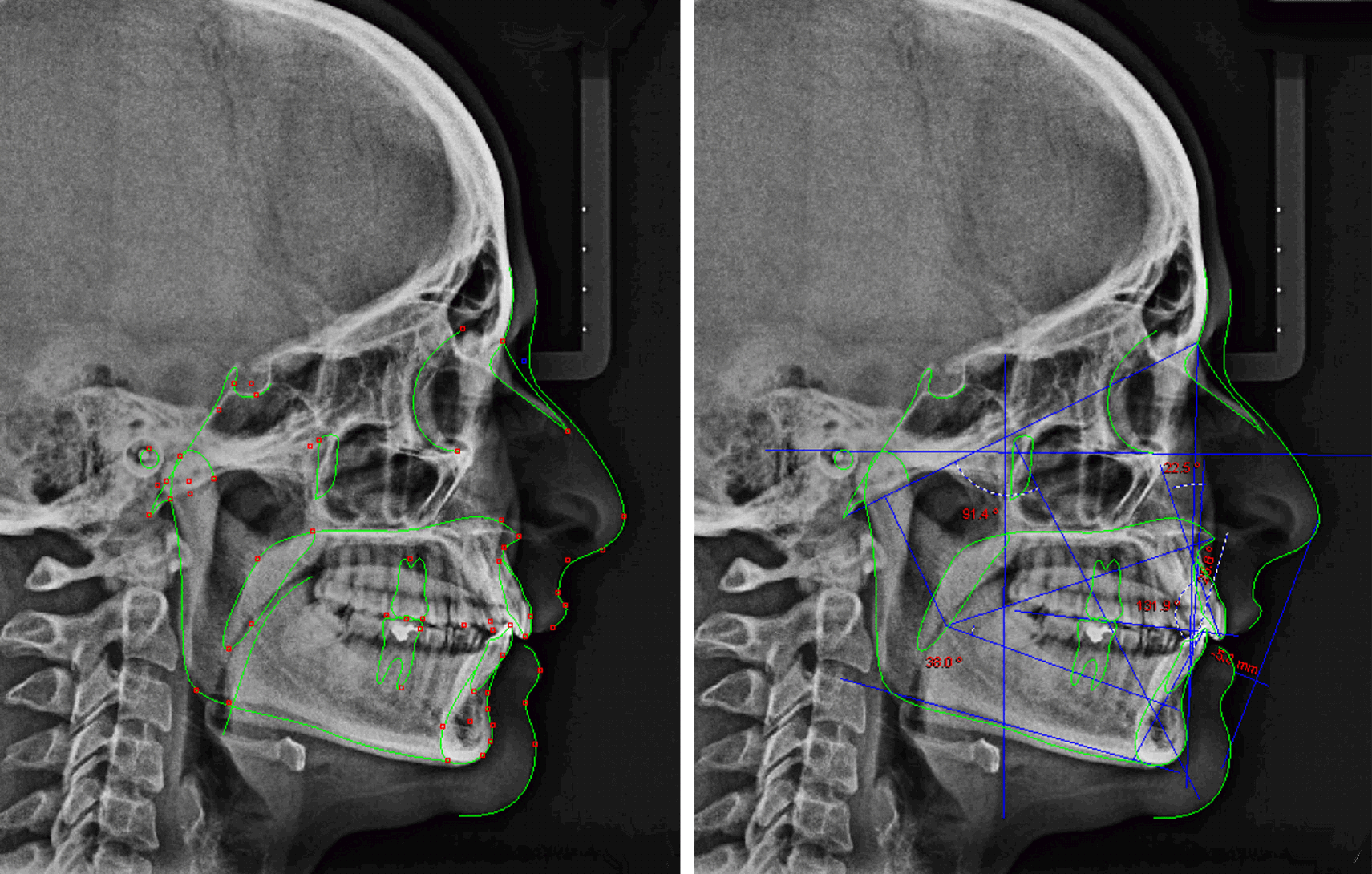
ARCUS is a unified cephalometric diagnostic system designed to analyze craniofacial relationships in an integrated and hierarchical manner, going beyond the isolated interpretation of linear or angular measurements. The core concept of ARCUS is based on the idea that form, function, and growth pattern (Biotype) cannot be evaluated as independent entities, but rather as interrelated units within a dynamic and unified system.
The ARCUS multilevel assessment system is designed as a structured diagnostic and cephalometric test with progressive levels of analysis and an extensive database that allows, for example, the linking of cephalometric and clinical situations or functional alterations in a single question. This enables a gradual interpretation of craniofacial and dental relationships according to clinical complexity and diagnostic needs.
This multilevel design ensures that the diagnosis evolves from a comprehensive structural assessment to a detailed functional and predictive evaluation, maintaining consistency throughout the entire diagnostic process.
Make
Beyond Measurement, Toward Understanding
Organizations, institutions, and strategic partners interested in advancing innovation in AI-driven orthodontics are invited to collaborate with ARCUS, supporting the development of a next-generation diagnostic system that integrates cephalometric analysis, clinical parameters, and bioprogressive principles to deliver more precise, objective, and personalized treatment planning, while also contributing to a forward-thinking educational platform that promotes continuous learning, evaluative training, and a deeper understanding of individualized patient care.
Get Involved
Our Partners & Sponsors



All rights reserved. No part of this publication may be reproduced, stored in a retrieval system, or transmitted, in any form or by any means electronic, mechanical, photocopying, recording or otherwise, except with permission from Orthoprogressive.com
Quick Links
Clinical Cases
Blog
Podcast